


Hi, my lovelies! ❤️
How is October going so far?
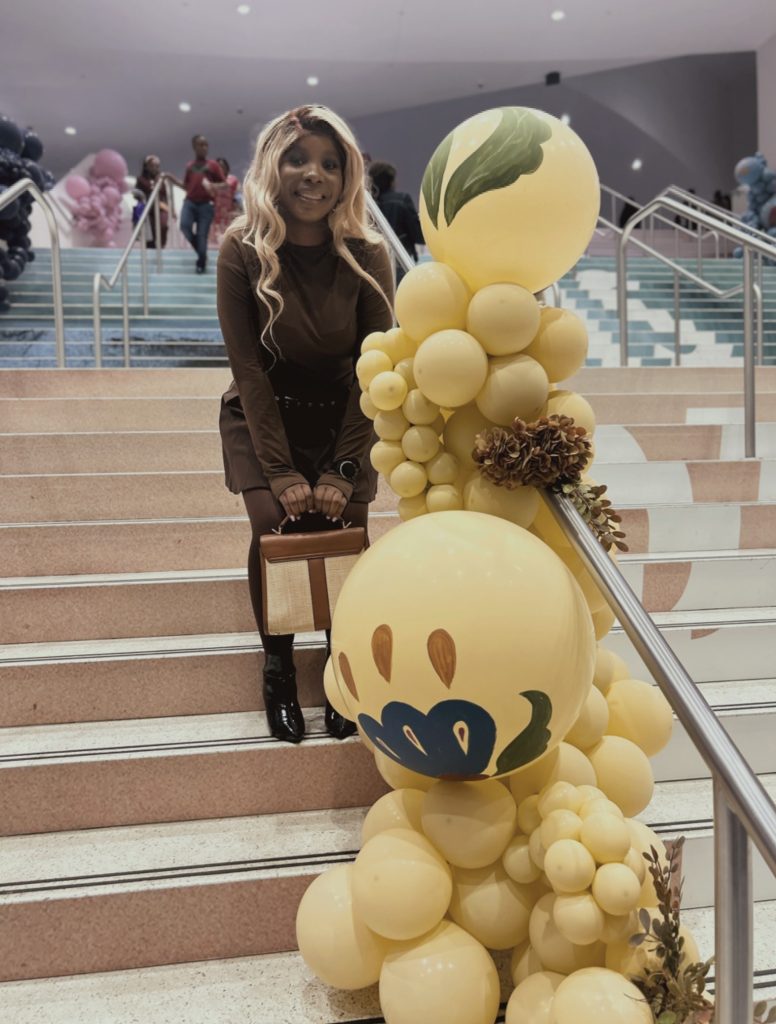
This month has been quite hectic for me, but somewhere in the middle of my busy schedule, I knew I needed to sit down and write. I made it to this year’s Love Your Life conference at my church! The last time I attended was in 2023, and I made sure I wasn’t going to miss this year’s conference, even though I had a lab report due. Haha!
Looking back, I am so glad I went. The conference got me reflecting on my life, the different seasons I have walked through, and just how much I have grown.
There is a special kind of beauty in looking back on your life and giving thanks to God, not because everything has been perfect, but because you can recognize how faithful He has been through it all.
Sometimes, we become so consumed with what we are waiting for that we forget to appreciate what God has already brought us through. We focus on the unanswered prayers, the delayed plans, and the things that have yet to fall into place. But every now and then, we need to pause, look back, and acknowledge the goodness of God.
Loving your life does not mean your life is perfect. It means you can find joy, gratitude, and hope in knowing that God is still writing your story.
This year’s conference featured the beautiful Pastor Stephanie Okafor, whose message gave me so much to reflect on. I want to share some of the lessons that stayed with me and how I have been thinking about them in relation to my own life.
1. Give God Room to Write Your Story
Have you ever noticed how much we love to plan our lives?
We have timelines, goals, expectations, and sometimes an entire picture of how we believe our lives should turn out. We want to get certain things done by a particular age, reach certain milestones by a certain time, and follow a path that makes sense to us.
There is absolutely nothing wrong with planning. The problem begins when we become so attached to our plans that we leave little or no room for God to do things differently.
Isaiah 55:8–9 reminds us that God’s thoughts are not our thoughts, and His ways are not our ways.
Isn’t it interesting that we can spend so much time trying to figure out the next chapter of our lives when God may be writing an entirely different story?
Sometimes, we pray for a particular opportunity, and it does not happen. We ask God to open a door, and it remains closed. We may even wonder whether we heard Him correctly or whether we did something wrong.
But what if the closed door is not the end of the story?
What if God sees something we cannot see? What if the delay is teaching us something we would otherwise miss? And what if the path we did not choose is the very path through which He intends to reveal His faithfulness?
Psalm 2:4 says that the One enthroned in heaven laughs. It is a reminder of God’s sovereignty, even when human beings make their plans as though they have complete control over everything.
I am learning that faith is not just about trusting God to accomplish what I want. It is also about trusting Him when His plans look nothing like mine.
We can make plans, but we must also learn to surrender them.
Leave room for God to surprise you. Leave room for Him to redirect you. Leave room for Him to write a story that is bigger than the one you imagined for yourself.
2. If It Ends With You, It Doesn’t Glorify God
Not everyone will stand behind a pulpit to preach, but every believer has an opportunity to let their light shine.
Matthew 5:16 tells us to let our light shine before others so that they may see our good works and glorify our Father in heaven.
God has deposited something in each of us. It may be a gift, a talent, a testimony, a skill, a lesson learned through hardship, or an experience that could help someone else navigate a difficult season.
The question is: What are we doing with what God has entrusted to us?
Sometimes, we hold back because we think what we have to offer is not significant enough. We assume that people can find the information themselves, that someone else has already shared the message, or that our contribution will not make much of a difference.
I have been guilty of this myself.
Ever since I joined the military, I have felt a strong desire to create videos educating people about military life. I have wanted to share information about my experiences and help people better understand the military. Yet, I kept pushing that desire aside because, to be honest, I already have a lot on my plate.
Interestingly, when I finally shared a post reflecting on my 11 years in the Army, it received so much engagement. People reached out privately to ask questions and learn more about my experiences.
And it made me think.
Some of the things I assumed people could easily find online were things they genuinely wanted to hear from someone who had experienced them firsthand. They wanted the personal perspective, the explanation, and the opportunity to ask questions.
That experience reminded me that what feels ordinary to you may be the very thing someone else needs to hear.
Your testimony does not have to be dramatic to be meaningful. Your experience does not have to be extraordinary to be useful. And you do not have to know everything before you begin sharing what you know.
Perhaps God wants to use the lessons you learned in school, the mistakes you made, the challenges you overcame, or the doors He opened for you to encourage someone who is still trying to find their way.
We cannot keep everything God has placed in our hands to ourselves.
This does not mean we need to share every detail of our lives publicly. Wisdom, privacy, and discernment still matter. But we should be willing to share what can genuinely encourage, teach, or bless others.
If God has brought you through something, consider who might benefit from hearing how you made it through.
Your story is not just about you. Sometimes, it is an answer to someone else’s prayer.
3. Lust Wants From You; Love Wants For You
I could honestly write an entire book about this one!
The distinction between wanting something from someone and wanting something for someone is worth reflecting on, especially when it comes to relationships.
Lust is often driven by what we want to gain, satisfy, or possess. Godly love, on the other hand, seeks the good of the other person. It is concerned with their well-being, growth, and flourishing.
First Corinthians 13:4–7 describes love as patient and kind. It tells us that love does not envy, boast, or insist on its own way.
When we look at the fruit of the Spirit in Galatians 5:22–23, we see qualities such as love, joy, peace, patience, kindness, goodness, faithfulness, gentleness, and self-control.
These are not qualities that should exist only in our relationship with God. They should also shape how we treat the people around us.
Whether it is a marriage, a romantic relationship, a friendship, or a family relationship, genuine love should create room for growth. It should encourage us to become better people, not make us feel as though we must continually diminish ourselves to keep someone else comfortable.
A person who genuinely loves you should not want you to shrink because of their greed, pride, insecurity, or selfish interests.
Love does not mean that someone will always agree with you. It does not mean that relationships will never require sacrifice, compromise, correction, or difficult conversations. Sometimes, love tells us things we do not want to hear.
But there is a difference between someone who challenges you because they want to see you grow and someone who diminishes you because they want to maintain control.
Godly love does not demand that you abandon your identity, your God-given purpose, or your dignity to prove your devotion to another person.
And this reflection is not only about the people we choose to love. It is also about the kind of people we are becoming.
Do we celebrate other people’s growth? Can we genuinely rejoice when someone succeeds? Do we support the people we claim to love, or do we become uncomfortable when they begin to blossom?
These are questions worth asking ourselves.
Love should not be about how much you can take from someone. It should also be about how sincerely you desire to see them become all that God has called them to be.
4. There Is Something God Wants to Reveal About You
You might not love your life right now. You might even think I am living in a world of fantasy because your reality feels nothing like what you hoped for.
But through the different seasons I have experienced, I have learned that we don’t always understand what a season is teaching us while we are in it.
Sometimes, difficult experiences reveal our strength, reshape our priorities, and teach us things about ourselves that we might never have discovered otherwise.
Romans 8:28 reminds us that God works all things together for the good of those who love Him.
This doesn’t mean everything that happens is good, but it reminds us that pain doesn’t have to be the end of our story.
Sometimes, the revelation comes gradually. You look back one day and realize that the season you thought would break you also taught you something about who you are becoming.
5. Where People End, God Begins
Human beings can be wonderful, but we are also imperfect. People can disappoint us, misunderstand us, walk away from us, or fail to show up when we need them most.
Sometimes, the people we expect to support us are unable to do so. Other times, we place expectations on people that they simply cannot fulfill.
It is easy to become discouraged when the help we hoped for does not come from the people we expected.
But I am learning that people were never meant to take the place of God in our lives.
We can appreciate people without making them our source. We can receive help from others without believing that our future depends entirely on them. We can be grateful for relationships while recognizing that human beings have limitations.
God is not limited by the same things that limit us.
Philippians 4:19 reminds us that God supplies our needs according to His riches in glory in Christ Jesus.
This does not mean that God will always give us everything we ask for, or that we will never experience disappointment. It means we can continue to trust His character even when our circumstances are uncertain.
Sometimes, a door closes, a relationship changes, or an opportunity falls through, and we struggle to imagine how anything good could come from it.
But our inability to see the next step does not mean there is no next step.
Where our understanding ends, we can still choose faith. Where our resources are limited, we can still seek God’s wisdom. Where people disappoint us, we can still find comfort in His presence.
And perhaps loving our lives also means learning not to place the weight of our entire future on another human being.
People can be instruments of God’s goodness, but they are not God.
6. Learn to Slow Down in the Presence of the Lord
In 1 Samuel 3, Samuel needed Eli’s guidance before he recognized that God was calling him.
This reminds me that we need to cultivate the habit of spending time with God and learning to discern His voice.
Sometimes, we rush through our prayers and Bible reading because we have so much to do. But a relationship with God requires more than simply checking off a task on our to-do list.
Let’s learn to slow down, reflect on His Word, and make room for quiet moments with Him. We may not always receive immediate answers, but we can grow in wisdom, discernment, and intimacy with God.
You cannot cultivate a deeper relationship with someone you never make time to know. Make room for God, not just in your schedule, but in your attention.
7. Your Brokenness Is Not the End of Your Story
We have all heard the story of Joseph in the Bible. God showed him glimpses of his future without revealing the suffering he would experience along the way.
He was betrayed by his brothers, sold into slavery, falsely accused, and imprisoned.
I used to dislike it when men of God comforted me with Joseph’s story. Some even called me Joseph, although I am a woman! Haha!
There were times I wondered why I had to go through certain experiences. But as time passed, I began to understand some of the lessons those hills and valleys taught me.
Genesis 50:20 reminds us that what others intended for evil, God was able to use for good.
I don’t believe we have to pretend our painful experiences don’t hurt. But I do believe that our pain does not have to define our ending.
Your story is still unfolding. Do not mistake a painful chapter for the end of the book.
So, My Lovelies, Love Your Life!
For me, loving my life means being grateful for answered prayers while trusting God with the unanswered ones. It means celebrating others without feeling behind, appreciating how far I have come, and giving myself grace in the seasons when life doesn’t go as planned.
You don’t have to pretend everything is perfect to appreciate your life. You can acknowledge your pain and still have hope.
Wherever you are in your journey, take a moment to reflect on how far God has brought you. And if you are in a difficult season, remember that you don’t have to understand every chapter while you are still living through it.
Love your life, not because everything is perfect, but because God is still writing your story.
With love, ❤️
Your girl